
February 29, 2024
10 min read
Digital video content consumption has become a powerful and attractive means of communication. Two key formats that have gained popularity in online visual advertising are Instream and Outstream videos. These formats play a crucial role in capturing the audience's attention.
Streaming video is advertising seamlessly integrated into the natural flow of content. It usually appears before, during, or after the main visual content. This format allows advertisers to engage with their audience while watching a video.
Outstream, on the other hand, takes a different approach by placing visual ads in non-video environments. Posting occurs in articles, social media feeds, or other content. This format allows advertisers to reach audiences outside of traditional video platforms. Understanding Instream vs Outstream is essential. Each format presents unique opportunities and challenges, affecting the overall impact of visual campaigns on brand awareness, audience engagement, and conversion rates.
These video ads are two different formats. People use them in digital advertising. Each format has its own unique characteristics and placement strategies. Inline visual ads integrate into existing content, engaging users who are watching videos. External advertising is entering the non-video environment, extending the reach of visual advertising to various online spaces. Marketers choose between these formats based on campaign goals. The target audience and the desired user experience are also crucial. Understanding the nuances of inline and external visual advertising is critical to creating effective and well-targeted digital advertising campaigns. So, let's take a closer look at Instream Outstream video ads.
Inline ads are seamlessly integrated into your existing video content. They usually appear before, during, or after the main visual content. These ads often appear on platforms like YouTube, streaming services, or other websites.
Features:In general, this is a video ad placed in video content.
Instream and Outstream videos are different. The second is an ad that plays outside the traditional video environment. They can be found in non-video contexts. People may see this in articles, social media feeds, or other content where playback isn't the primary goal.
Features:These ads are more flexible and can be placed on more platforms. But at the same time, it is less integrated into the video content.
So both options can be good for specific purposes.
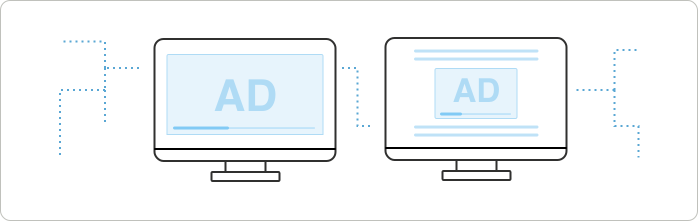
The choice between these formats depends on the objectives of the campaign. The behavior of the target audience and the desired context for delivering the advertising message are also necessary. The main differences are their placement, content integration, and user interaction. The differences among them help you better choose what is suitable for you. In fact, the difference between the two types of such advertising is noticeable. But Instream and Outstream videos have a lot in common. They can often be combined for a more significant effect. But if you want to choose, you should consider the main details.
Here's a breakdown of the discrepancies between these two video ad formats.
Offers placement flexibility, reaching audiences beyond dedicated visual platforms.
Here you should focus on users and take into account your own goal.
In this matter, it is worth understanding whether you want to choose more integrated or unobtrusive advertising. This is one of the main differences between Instream and Outstream videos.
In this matter, it is worth studying on which platforms it is better for you to advertise. This will help make the final choice.
Ultimately, you need to choose the type of advertising according to your goals.
Adelion works as an Ad Exchange. It is a technology platform that makes buying and selling media ads from multiple ad networks easy. Real-time bidding determines inventory prices. This approach is technological, as opposed to the historical approach to negotiating the price.
Instream and Outstream video advertising takes advantage of the platform's technological prowess. This is real-time bidding. The dynamic pricing model provides instant inventory pricing. This optimizes value for both buyers and sellers. This ensures the efficiency and accuracy of the ad-buying process. Thus, the process is consistent with the rapid development of digital advertising.
Adelion's creative approach to ad exchange, combined with a choice between Instream and Outstream video advertising, enables advertisers to navigate the complexity of the digital landscape. This is independent of whether it is about immersing the audience in the flow of content or freeing them from traditional placements. Adelion technology ensures seamless and efficient operation, changing the future of video advertising.
Inline ads start during the video and play continuously for five seconds until the user can skip them. Non-inline ads, on the other hand, play automatically when a user scrolls through a video. Both formats aim to grab users' attention and encourage them to view the ad. Choose one, or try a combination of them. It all depends on your goals.
Another notable difference between Instream and Outstream video advertising is mobile-friendliness. Inline can serve content to both mobile and desktop devices. External is mainly used for mobile sites or apps. Using both ads provides full coverage without over-focusing one type of user over another.
You might also like: